Tuesday, February 22, 2011
New Endeavors
News: I'm part of Dust Jacket Dispatch now. Articles are posted Monday through Friday. Check it out. You'll enjoy it.


Saturday, May 15, 2010
The Great Scanlation Debate
Minutes ago, I wrapped up reading the latest edition of Hey, Answerman! over on ANN and their reader write-in topic deals with the U.S. manga industry and how to help turn it around. Some of the suggestions are very good and made me feel like there might be some hope for manga publishers. A large chunk of them, though, really made me angry. Fellow manga blogger, Melinda Beasi, wrote a great reaction piece to this topic a little while back, and I'd like to add my voice to the debate.
One of the complaints that keeps popping up is: "it's too expensive for a product that only takes a few hours to consume." Typing that just now made my blood boil. When I take a look at a volume of manga, I see a massive collection of artwork. The manga-ka and his assistants sink countless hours into each drawing and each volume consists of thousands of them. I'm not sure how many manga fans have actually seen how the art world works, but from my experience, a worthwhile drawing or painting is going to set me back at least a hundred bucks. For an average price of ten dollars, I get to gawk at a titanic collection of artwork. Every time I read a Tezuka title and come across one of his two-page panoramic nature spreads, I can't help but think of how long that must have taken him to draw every single tree, blade of grass, rain drop, and shadow without the assistance of the technology we have today. And then I think about how he poured hours of his life out in order to produce something most people glance over in ten seconds or less. Really, when you think about it, selling a volume of manga for ten bucks is a crime.
The next big complaint is that scanlators do it better. This confuses me beyond belief, because I'm pretty sure that 95% of manga readers out there have no idea how to read Japanese or determine if a translation is good or not. I will shamefully admit that I used to be in their boat. I was young and dumb and convinced that if I could have it for free, it must be better than a commercial version. I have since been cured of that train of thought and I feel much better off.
Perhaps the best suggestion out there is for the manga companies to hire the translators that scanlation communities rely on. This happened with HisshouBuraiKen, who got to work on Crunchyroll's release of EyeShield 21. I could see this being a big way to get scanlation junkies on board with buying manga: there are certain translators they trust. At the same time, from the industry standpoint, this is saying that those who break copyright law can be rewarded for their initial infractions.
There is a sentiment out there that anyone who works as a professional translator cannot house the same love for a series that a scanlator does. Having met Frederik Schodt this past summer (he is one of the original fan-translators, who started working on pen and paper translations of Tezuka's Phoenix back in the seventies) I can safely say that manga translators are not heartless robots working for the Man. Mr. Schodt most recently translated Viz's release of Pluto and when he talked about it, he was filled with passion and enthusiasm for what he was bringing to the manga world.
Admittedly, I have found that buying manga has become a lot easier now that I am out of college and have a real job that provides me a lot more discretionary income than I had in school.
There are artists, storytellers, and translators out there who make products that make my life more enjoyable. The translators really are the unsung heroes for most English speakers because they are the ones who make it possible for us to enjoy these tales in the first place. I want to make sure they have the opportunity to keep doing that, even if they're only taking a few cents away from each volume I buy.
One of the complaints that keeps popping up is: "it's too expensive for a product that only takes a few hours to consume." Typing that just now made my blood boil. When I take a look at a volume of manga, I see a massive collection of artwork. The manga-ka and his assistants sink countless hours into each drawing and each volume consists of thousands of them. I'm not sure how many manga fans have actually seen how the art world works, but from my experience, a worthwhile drawing or painting is going to set me back at least a hundred bucks. For an average price of ten dollars, I get to gawk at a titanic collection of artwork. Every time I read a Tezuka title and come across one of his two-page panoramic nature spreads, I can't help but think of how long that must have taken him to draw every single tree, blade of grass, rain drop, and shadow without the assistance of the technology we have today. And then I think about how he poured hours of his life out in order to produce something most people glance over in ten seconds or less. Really, when you think about it, selling a volume of manga for ten bucks is a crime.
The next big complaint is that scanlators do it better. This confuses me beyond belief, because I'm pretty sure that 95% of manga readers out there have no idea how to read Japanese or determine if a translation is good or not. I will shamefully admit that I used to be in their boat. I was young and dumb and convinced that if I could have it for free, it must be better than a commercial version. I have since been cured of that train of thought and I feel much better off.
Perhaps the best suggestion out there is for the manga companies to hire the translators that scanlation communities rely on. This happened with HisshouBuraiKen, who got to work on Crunchyroll's release of EyeShield 21. I could see this being a big way to get scanlation junkies on board with buying manga: there are certain translators they trust. At the same time, from the industry standpoint, this is saying that those who break copyright law can be rewarded for their initial infractions.
There is a sentiment out there that anyone who works as a professional translator cannot house the same love for a series that a scanlator does. Having met Frederik Schodt this past summer (he is one of the original fan-translators, who started working on pen and paper translations of Tezuka's Phoenix back in the seventies) I can safely say that manga translators are not heartless robots working for the Man. Mr. Schodt most recently translated Viz's release of Pluto and when he talked about it, he was filled with passion and enthusiasm for what he was bringing to the manga world.
Admittedly, I have found that buying manga has become a lot easier now that I am out of college and have a real job that provides me a lot more discretionary income than I had in school.
There are artists, storytellers, and translators out there who make products that make my life more enjoyable. The translators really are the unsung heroes for most English speakers because they are the ones who make it possible for us to enjoy these tales in the first place. I want to make sure they have the opportunity to keep doing that, even if they're only taking a few cents away from each volume I buy.
Monday, April 12, 2010
Yen Press is Awesome
A little while back, Yen Press used a blurb from my Manga Recon review of Cirque du Freak volume 1 to help promote the series.
Check out page three of this pdf.
How cool is that?
Check out page three of this pdf.
How cool is that?
MR: Manga Minis 4/12/2010

Today you can find my review of Cirque du Freak vol. 5 for Manga Recon. It's an incredibly addictive series that has some solid story telling.
Sunday, April 11, 2010
A Poll!
I decided to try something new. You'll now find a poll on the right-hand side of the page. Give it a click!
MR: Feature Review of Hanako and...
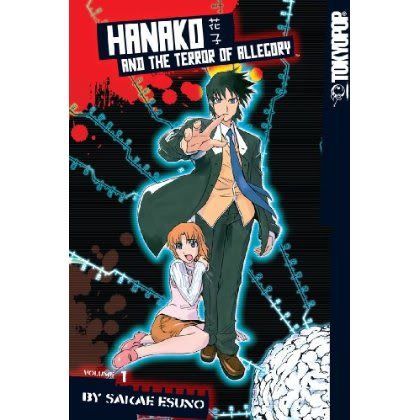
Here's my review of Hanako and the Terror of Allegory.
Check back on Tuesday for a link to the latest manga minis column, which will contain my write-up for Cirque du Freak volume 5 (due out April 30th).
Subscribe to:
Posts (Atom)