Tuesday, February 22, 2011
New Endeavors
News: I'm part of Dust Jacket Dispatch now. Articles are posted Monday through Friday. Check it out. You'll enjoy it.


Saturday, May 15, 2010
The Great Scanlation Debate
Minutes ago, I wrapped up reading the latest edition of Hey, Answerman! over on ANN and their reader write-in topic deals with the U.S. manga industry and how to help turn it around. Some of the suggestions are very good and made me feel like there might be some hope for manga publishers. A large chunk of them, though, really made me angry. Fellow manga blogger, Melinda Beasi, wrote a great reaction piece to this topic a little while back, and I'd like to add my voice to the debate.
One of the complaints that keeps popping up is: "it's too expensive for a product that only takes a few hours to consume." Typing that just now made my blood boil. When I take a look at a volume of manga, I see a massive collection of artwork. The manga-ka and his assistants sink countless hours into each drawing and each volume consists of thousands of them. I'm not sure how many manga fans have actually seen how the art world works, but from my experience, a worthwhile drawing or painting is going to set me back at least a hundred bucks. For an average price of ten dollars, I get to gawk at a titanic collection of artwork. Every time I read a Tezuka title and come across one of his two-page panoramic nature spreads, I can't help but think of how long that must have taken him to draw every single tree, blade of grass, rain drop, and shadow without the assistance of the technology we have today. And then I think about how he poured hours of his life out in order to produce something most people glance over in ten seconds or less. Really, when you think about it, selling a volume of manga for ten bucks is a crime.
The next big complaint is that scanlators do it better. This confuses me beyond belief, because I'm pretty sure that 95% of manga readers out there have no idea how to read Japanese or determine if a translation is good or not. I will shamefully admit that I used to be in their boat. I was young and dumb and convinced that if I could have it for free, it must be better than a commercial version. I have since been cured of that train of thought and I feel much better off.
Perhaps the best suggestion out there is for the manga companies to hire the translators that scanlation communities rely on. This happened with HisshouBuraiKen, who got to work on Crunchyroll's release of EyeShield 21. I could see this being a big way to get scanlation junkies on board with buying manga: there are certain translators they trust. At the same time, from the industry standpoint, this is saying that those who break copyright law can be rewarded for their initial infractions.
There is a sentiment out there that anyone who works as a professional translator cannot house the same love for a series that a scanlator does. Having met Frederik Schodt this past summer (he is one of the original fan-translators, who started working on pen and paper translations of Tezuka's Phoenix back in the seventies) I can safely say that manga translators are not heartless robots working for the Man. Mr. Schodt most recently translated Viz's release of Pluto and when he talked about it, he was filled with passion and enthusiasm for what he was bringing to the manga world.
Admittedly, I have found that buying manga has become a lot easier now that I am out of college and have a real job that provides me a lot more discretionary income than I had in school.
There are artists, storytellers, and translators out there who make products that make my life more enjoyable. The translators really are the unsung heroes for most English speakers because they are the ones who make it possible for us to enjoy these tales in the first place. I want to make sure they have the opportunity to keep doing that, even if they're only taking a few cents away from each volume I buy.
One of the complaints that keeps popping up is: "it's too expensive for a product that only takes a few hours to consume." Typing that just now made my blood boil. When I take a look at a volume of manga, I see a massive collection of artwork. The manga-ka and his assistants sink countless hours into each drawing and each volume consists of thousands of them. I'm not sure how many manga fans have actually seen how the art world works, but from my experience, a worthwhile drawing or painting is going to set me back at least a hundred bucks. For an average price of ten dollars, I get to gawk at a titanic collection of artwork. Every time I read a Tezuka title and come across one of his two-page panoramic nature spreads, I can't help but think of how long that must have taken him to draw every single tree, blade of grass, rain drop, and shadow without the assistance of the technology we have today. And then I think about how he poured hours of his life out in order to produce something most people glance over in ten seconds or less. Really, when you think about it, selling a volume of manga for ten bucks is a crime.
The next big complaint is that scanlators do it better. This confuses me beyond belief, because I'm pretty sure that 95% of manga readers out there have no idea how to read Japanese or determine if a translation is good or not. I will shamefully admit that I used to be in their boat. I was young and dumb and convinced that if I could have it for free, it must be better than a commercial version. I have since been cured of that train of thought and I feel much better off.
Perhaps the best suggestion out there is for the manga companies to hire the translators that scanlation communities rely on. This happened with HisshouBuraiKen, who got to work on Crunchyroll's release of EyeShield 21. I could see this being a big way to get scanlation junkies on board with buying manga: there are certain translators they trust. At the same time, from the industry standpoint, this is saying that those who break copyright law can be rewarded for their initial infractions.
There is a sentiment out there that anyone who works as a professional translator cannot house the same love for a series that a scanlator does. Having met Frederik Schodt this past summer (he is one of the original fan-translators, who started working on pen and paper translations of Tezuka's Phoenix back in the seventies) I can safely say that manga translators are not heartless robots working for the Man. Mr. Schodt most recently translated Viz's release of Pluto and when he talked about it, he was filled with passion and enthusiasm for what he was bringing to the manga world.
Admittedly, I have found that buying manga has become a lot easier now that I am out of college and have a real job that provides me a lot more discretionary income than I had in school.
There are artists, storytellers, and translators out there who make products that make my life more enjoyable. The translators really are the unsung heroes for most English speakers because they are the ones who make it possible for us to enjoy these tales in the first place. I want to make sure they have the opportunity to keep doing that, even if they're only taking a few cents away from each volume I buy.
Monday, April 12, 2010
Yen Press is Awesome
A little while back, Yen Press used a blurb from my Manga Recon review of Cirque du Freak volume 1 to help promote the series.
Check out page three of this pdf.
How cool is that?
Check out page three of this pdf.
How cool is that?
MR: Manga Minis 4/12/2010

Today you can find my review of Cirque du Freak vol. 5 for Manga Recon. It's an incredibly addictive series that has some solid story telling.
Sunday, April 11, 2010
A Poll!
I decided to try something new. You'll now find a poll on the right-hand side of the page. Give it a click!
MR: Feature Review of Hanako and...
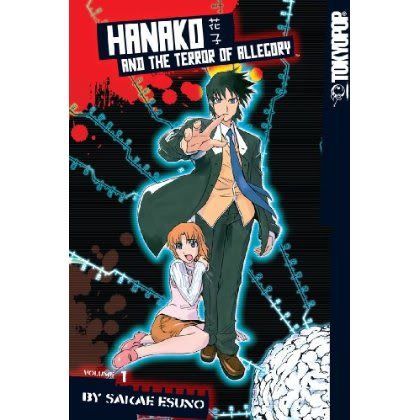
Here's my review of Hanako and the Terror of Allegory.
Check back on Tuesday for a link to the latest manga minis column, which will contain my write-up for Cirque du Freak volume 5 (due out April 30th).
Thursday, April 8, 2010
Monday, March 8, 2010
Sunday, March 7, 2010
YA Lit: The Hunger Games
The Hunger Games
By Suzanne Collins
Rating: A+
I've taken to reading a lot of Young Adult fiction this year. Blame my students for this. The experience has reminded me that some of the best stories out there aren't being aimed at adults. This is always the case with manga in the U.S., so I should have guessed it would hold true for YA lit, as well.
Then I figured I could use my blog to write up some reviews of my favorite titles. Here's my first entry.
A week or two ago, I picked up The Hunger Games by Suzanne Collins, which absolutely blew me away. This was right on the heels of Jonathan Tropper's This Is Where I Leave You (his prose is just as good as Gatsby-era Fitzgerald), so I wanted something a little lighter.
Man, was I wrong.
This book is nasty and brutal and raw. It takes a strong character and puts her through a series of crises that, one-by-one, break her into little pieces. The worst part is that, in her world, it's something that happens year after year.
Katniss Everdeen lives in a post-breakdown U.S. The continent is divided into 13 colonies and a capital city. The colonies each perform a specialized service to uphold the capital's position as the pinnacle of society. Katniss resides in District 12 (a coal mining town) with her mother and her younger sister, Prim. After losing her father in a mine collapse, her mother fell into a deep depression and it fell to Katniss to provide for her family.
Food is a precious commodity for the residents of the Districts. The capital is in charge of rations and hands out barely enough to keep their labor force alive. Hunting is off limits, but Katniss had learned from her father all about the wilderness and how to use a bow. Since District 12 is especially poor, their enclosing electric fence has a tendency to fail (as does all electricity in the town) on a regular basis. She spends many days out in the woods with her friend, Gale, who also seeks extra food for his family.
The book opens on Reaping Day, the only holiday anyone seems to celebrate. Reaping Day is more of a holiday for the capital than anywhere else, though, as it is a day of sacrifice for those in the District.
In order to remind the other colonies that they serve the capital, Reaping Day serves to gather two candidates from each village to compete in the annual Hunger Games. Starting at the age of 12, all citizens are entered into a lottery to compete for a chance to win extra food for their families.
It's a costly game, though, as the 24 chosen contestants are placed in an arena where they all fight to the death. The Hunger Games are a twisted version of the Olympics: all districts must participate and each town has people to root for. Of course, those in the districts hate the games, while the capital is swept away by Hunger Games fever.
When Katniss becomes a part of the Games, she is pushed to her limits time and again. She has one other villager who might be an ally, but she can't be sure. Her trainer is a drunkard and she's up against people who have been training all their lives to be a part of the Games. The capital treats each contestant like a celebrity, assigning stylists, conducting tv interviews, and holding viewer polls to determine popular contestants.
I won't go too much into plot details. What really got under my skin was how everything that Katniss deserves to experience as a young adult is taken from her. She has no chance to appreciate anything or develop a sense of wonder. Her life is always about just barely scraping by, whether it's finding food or fighting for her life.
The Hunger Games offers an exhausting, spellbinding journey that will leave readers breathless. Collins' world is darkly beautiful, brimming with politics, personality, and nightmares. Plot-twists are wrenching, both for the characters and for the reader; there are plenty of scenes that have stuck with me, simply because of how horrifying they are. And before long, you'll be scared to turn the page, because you never know if your favorite character is going to survive.
Don't miss out on one of the best novels written in recent years.
By Suzanne Collins
Rating: A+
I've taken to reading a lot of Young Adult fiction this year. Blame my students for this. The experience has reminded me that some of the best stories out there aren't being aimed at adults. This is always the case with manga in the U.S., so I should have guessed it would hold true for YA lit, as well.
Then I figured I could use my blog to write up some reviews of my favorite titles. Here's my first entry.
A week or two ago, I picked up The Hunger Games by Suzanne Collins, which absolutely blew me away. This was right on the heels of Jonathan Tropper's This Is Where I Leave You (his prose is just as good as Gatsby-era Fitzgerald), so I wanted something a little lighter.
Man, was I wrong.
This book is nasty and brutal and raw. It takes a strong character and puts her through a series of crises that, one-by-one, break her into little pieces. The worst part is that, in her world, it's something that happens year after year.
Katniss Everdeen lives in a post-breakdown U.S. The continent is divided into 13 colonies and a capital city. The colonies each perform a specialized service to uphold the capital's position as the pinnacle of society. Katniss resides in District 12 (a coal mining town) with her mother and her younger sister, Prim. After losing her father in a mine collapse, her mother fell into a deep depression and it fell to Katniss to provide for her family.
Food is a precious commodity for the residents of the Districts. The capital is in charge of rations and hands out barely enough to keep their labor force alive. Hunting is off limits, but Katniss had learned from her father all about the wilderness and how to use a bow. Since District 12 is especially poor, their enclosing electric fence has a tendency to fail (as does all electricity in the town) on a regular basis. She spends many days out in the woods with her friend, Gale, who also seeks extra food for his family.
The book opens on Reaping Day, the only holiday anyone seems to celebrate. Reaping Day is more of a holiday for the capital than anywhere else, though, as it is a day of sacrifice for those in the District.
In order to remind the other colonies that they serve the capital, Reaping Day serves to gather two candidates from each village to compete in the annual Hunger Games. Starting at the age of 12, all citizens are entered into a lottery to compete for a chance to win extra food for their families.
It's a costly game, though, as the 24 chosen contestants are placed in an arena where they all fight to the death. The Hunger Games are a twisted version of the Olympics: all districts must participate and each town has people to root for. Of course, those in the districts hate the games, while the capital is swept away by Hunger Games fever.
When Katniss becomes a part of the Games, she is pushed to her limits time and again. She has one other villager who might be an ally, but she can't be sure. Her trainer is a drunkard and she's up against people who have been training all their lives to be a part of the Games. The capital treats each contestant like a celebrity, assigning stylists, conducting tv interviews, and holding viewer polls to determine popular contestants.
I won't go too much into plot details. What really got under my skin was how everything that Katniss deserves to experience as a young adult is taken from her. She has no chance to appreciate anything or develop a sense of wonder. Her life is always about just barely scraping by, whether it's finding food or fighting for her life.
The Hunger Games offers an exhausting, spellbinding journey that will leave readers breathless. Collins' world is darkly beautiful, brimming with politics, personality, and nightmares. Plot-twists are wrenching, both for the characters and for the reader; there are plenty of scenes that have stuck with me, simply because of how horrifying they are. And before long, you'll be scared to turn the page, because you never know if your favorite character is going to survive.
Don't miss out on one of the best novels written in recent years.
Saturday, March 6, 2010
The World I Create
I just read a fantastic manga from CMX. Check out my review of The World I Create here.
Monday, March 1, 2010
MR Manga Minis 3/1/2010
My review of volume 33 of Case Closed is now available for your reading pleasure.
Monday, February 22, 2010
Saturday, January 23, 2010
Tegami Bachi Vol. 1
By Hiroyuki Asada
Published by Viz
I bought Tegami Bachi while cleaning out a closing Borders Express. The cover art really grabbed me and a quick flip through the pages revealed some great artwork. I finally found a moment to sit down and read it and figured the ol' blog could use an update.
The overall concept of the manga is fascinating. The world is divided into three landmasses separated by concentric rivers. Citizens are divided according to class and require government-issued passes to travel across the bridges that connect the cities.
Perhaps my favorite part of this world is that there is no natural light at all, so the elite upper class have a man-made star built for their themselves. The outer towns don't have the resources to make another (so far, that's the only explanation I can come up with) and the outskirt towns have no light at all.
It is in the darkest part of the world that the story begins. Asada introduces readers to this world through an adventure of a Letter Bee: a government worker charged with delivering the mail throughout the world. His name is Gauche Suede (which is a truly awful combination of words) and he and his travel dog, Roda, find a mail post with a young boy chained to it. The Letter Bees all make use of the Nuremberg defense, which allows them to keep doing their jobs.
The act of chaining children to mail posts is a recurring plot point in volume one, which makes it impossible for me to want to pick up any further volumes. Gauche's original "letter" is named Lag and the story shifts over to Lag a few years later as he is leaving the town to become a Letter Bee. Along the way, he comes across a girl chained up to be mailed. She has insufficient postage and no return address, so she's left alone and untouched by every Letter Bee around. Lag offers to deliver her since he's not a full-fledge Bee and is allowed to assist in unpaid human trafficking.
Lag names her Niche and delivers her straight into the hands of some creepy men running a freak show. They've been after Niche because she is rumored to possess a "golden sword" because her mother ate some mythical creature. The sword in question turns out to be her hair and she destroys the tent and takes off. All of this begs the question: if she can turn her hair into a bladed edge, why the hell did she stay chained up in the first place? I can't believe not a single editor called Asada out on that and made him change it.
I'll finish with a little discussion of the art. Asada draws some really great landscapes. The star-studded skies are all beautiful to look at. His character designs aren't bad, either. What is bad, though, is the way he draws tears. Sometimes it even looks like the characters are oozing cottage cheese from their eyes. This wouldn't be much of an issue, if it weren't for the fact that someone seems to cry on every other page.
Tegami Bachi is a great concept with a botched execution. I really want to like it but there are so many flaws I know I won't be picking up any more volumes.
Published by Viz
I bought Tegami Bachi while cleaning out a closing Borders Express. The cover art really grabbed me and a quick flip through the pages revealed some great artwork. I finally found a moment to sit down and read it and figured the ol' blog could use an update.
The overall concept of the manga is fascinating. The world is divided into three landmasses separated by concentric rivers. Citizens are divided according to class and require government-issued passes to travel across the bridges that connect the cities.
Perhaps my favorite part of this world is that there is no natural light at all, so the elite upper class have a man-made star built for their themselves. The outer towns don't have the resources to make another (so far, that's the only explanation I can come up with) and the outskirt towns have no light at all.
It is in the darkest part of the world that the story begins. Asada introduces readers to this world through an adventure of a Letter Bee: a government worker charged with delivering the mail throughout the world. His name is Gauche Suede (which is a truly awful combination of words) and he and his travel dog, Roda, find a mail post with a young boy chained to it. The Letter Bees all make use of the Nuremberg defense, which allows them to keep doing their jobs.
The act of chaining children to mail posts is a recurring plot point in volume one, which makes it impossible for me to want to pick up any further volumes. Gauche's original "letter" is named Lag and the story shifts over to Lag a few years later as he is leaving the town to become a Letter Bee. Along the way, he comes across a girl chained up to be mailed. She has insufficient postage and no return address, so she's left alone and untouched by every Letter Bee around. Lag offers to deliver her since he's not a full-fledge Bee and is allowed to assist in unpaid human trafficking.
Lag names her Niche and delivers her straight into the hands of some creepy men running a freak show. They've been after Niche because she is rumored to possess a "golden sword" because her mother ate some mythical creature. The sword in question turns out to be her hair and she destroys the tent and takes off. All of this begs the question: if she can turn her hair into a bladed edge, why the hell did she stay chained up in the first place? I can't believe not a single editor called Asada out on that and made him change it.
I'll finish with a little discussion of the art. Asada draws some really great landscapes. The star-studded skies are all beautiful to look at. His character designs aren't bad, either. What is bad, though, is the way he draws tears. Sometimes it even looks like the characters are oozing cottage cheese from their eyes. This wouldn't be much of an issue, if it weren't for the fact that someone seems to cry on every other page.
Tegami Bachi is a great concept with a botched execution. I really want to like it but there are so many flaws I know I won't be picking up any more volumes.
Sunday, December 6, 2009
MW: Scattered Thoughts (That May Form an Article)
As mentioned in a previous post, I've been trying to get myself to read more of the established "classics" of manga. I now own volume one of Katsuhiro Otomo's Akira (although Kodansha's decision to publish it in left-to-right has me awfully puzzled), Yoshihiro Tatsumi's "A Drifting Life", and a whole mess of Tezuka's catalog.
While Frederik Schodt has spoken extremely high praise of Astro Boy, I decided to start with a different title. When RightStuf had a huge sale, I picked up a few of Tezuka's giganto-manga. Apollo's Song, Ode to Kirihito, and MW are all door-stops of manga, weighing in at 500+ pages each.
Of those three, the title that sticks out most in my mind is MW, which the dust jacket labels as Tezuka's darkest work. I can see that, easily. The amount of dismemberment, sexual depravity, and misogyny is tremendous. Compared to the more wholesome image of Astro Boy, MW seems like it came from a very different man with the same name.
The main characters struggle with serious moral dilemmas. Actually, on second thought, only one of them does. Michio Yuki, arguably the "villain" of the story, has been exposed to a chemical weapon which has robbed him of a moral compass. His friend, a priest named Garai, hears all of Yuki's confessions and serves as the one who pardons him.
What keeps Garai from turning Yuki in is the fact that they have consummated a homosexual relationship. Garai, while physically attracted to Yuki, is always repulsed by Yuki's actions, which involve blackmailing, kidnapping, rape, and murder.
Several scenes with Yuki left me feeling completely disgusted, sometimes to the point of putting the book down and walking away. Even so, I remained intrigued by Yuki's character and wanted to see if he was capable of reform.
Tezuka's portrayal of homosexuality is surprisingly non-stereotypical, considering the time at which it was written. While their relationship is far from "loving", Tezuka does not use it insult Garai's integrity. Instead, it is used by Yuki to manipulate Garai and mess with his feelings and thoughts. The idea of being in love with Yuki throws all of Garai's judgments into disarray, which is an idea normally portrayed by a heterosexual relationship in the manga I'm used to reading. To see it presented in a different fashion works well.
As Yuki's crimes become more and more disturbing, it becomes painfully clear that the man is beyond any possible redemption. Despite the eternal optimism of Garai (who thinks "if I help him one more time, he might see the light), even his patience is worn away as Yuki continues to destroy the lives of everyone around him.
The ending is gimmicky and predictable. Along the way, though, the sense of tragedy never fades. Yuki may be the most evil person in the manga, but the entire time you can't help but notice how Garai--and Tezuka--place the blame on the military forces which created the chemical weapons. It's a super-thinly-veiled anti-war message that pervades so much of Japanese culture following the atomic bombing of their country.
MW is best read when spaced out over a longer stretch of time. Each chapter takes some time to digest (and, sometimes, the hope that you might forget a certain scene or two), and the overall sinister tone can become overbearing if read in huge chunks.
I'll offer up a few more Tezuka reviews as time passes. MW provides a very different (and very messed up) tale from the most famous name in manga history.
While Frederik Schodt has spoken extremely high praise of Astro Boy, I decided to start with a different title. When RightStuf had a huge sale, I picked up a few of Tezuka's giganto-manga. Apollo's Song, Ode to Kirihito, and MW are all door-stops of manga, weighing in at 500+ pages each.
Of those three, the title that sticks out most in my mind is MW, which the dust jacket labels as Tezuka's darkest work. I can see that, easily. The amount of dismemberment, sexual depravity, and misogyny is tremendous. Compared to the more wholesome image of Astro Boy, MW seems like it came from a very different man with the same name.
The main characters struggle with serious moral dilemmas. Actually, on second thought, only one of them does. Michio Yuki, arguably the "villain" of the story, has been exposed to a chemical weapon which has robbed him of a moral compass. His friend, a priest named Garai, hears all of Yuki's confessions and serves as the one who pardons him.
What keeps Garai from turning Yuki in is the fact that they have consummated a homosexual relationship. Garai, while physically attracted to Yuki, is always repulsed by Yuki's actions, which involve blackmailing, kidnapping, rape, and murder.
Several scenes with Yuki left me feeling completely disgusted, sometimes to the point of putting the book down and walking away. Even so, I remained intrigued by Yuki's character and wanted to see if he was capable of reform.
Tezuka's portrayal of homosexuality is surprisingly non-stereotypical, considering the time at which it was written. While their relationship is far from "loving", Tezuka does not use it insult Garai's integrity. Instead, it is used by Yuki to manipulate Garai and mess with his feelings and thoughts. The idea of being in love with Yuki throws all of Garai's judgments into disarray, which is an idea normally portrayed by a heterosexual relationship in the manga I'm used to reading. To see it presented in a different fashion works well.
As Yuki's crimes become more and more disturbing, it becomes painfully clear that the man is beyond any possible redemption. Despite the eternal optimism of Garai (who thinks "if I help him one more time, he might see the light), even his patience is worn away as Yuki continues to destroy the lives of everyone around him.
The ending is gimmicky and predictable. Along the way, though, the sense of tragedy never fades. Yuki may be the most evil person in the manga, but the entire time you can't help but notice how Garai--and Tezuka--place the blame on the military forces which created the chemical weapons. It's a super-thinly-veiled anti-war message that pervades so much of Japanese culture following the atomic bombing of their country.
MW is best read when spaced out over a longer stretch of time. Each chapter takes some time to digest (and, sometimes, the hope that you might forget a certain scene or two), and the overall sinister tone can become overbearing if read in huge chunks.
I'll offer up a few more Tezuka reviews as time passes. MW provides a very different (and very messed up) tale from the most famous name in manga history.
Wednesday, December 2, 2009
NanoWriMo
I spent the second half of November writing for National Novel Writing Month. I'm just shy of the 25k mark today (the goal is to churn out 50k in 30 days). This (along with doing reviews for MR) has taken up a ton of my extra time after work.
The other big thing is that I've burned out on anime, which takes away from many things I could be writing for this blog. The new season of anime is abysmal and I haven't felt like catching up on anything I've missed.
Manga, though, that isn't a problem. I still love the stuff. I've been on a big Tezuka kick. Maybe I can find some time to do a write up on MW, Buddha, Ode to Kirihito, Apollo's Song, and a few other Tezuka titles I've perused recently.
Later!
The other big thing is that I've burned out on anime, which takes away from many things I could be writing for this blog. The new season of anime is abysmal and I haven't felt like catching up on anything I've missed.
Manga, though, that isn't a problem. I still love the stuff. I've been on a big Tezuka kick. Maybe I can find some time to do a write up on MW, Buddha, Ode to Kirihito, Apollo's Song, and a few other Tezuka titles I've perused recently.
Later!
Monday, October 19, 2009
Not Dead
Simply re-adjusting to a change in work habits. Things should go back to more regular updates in the next week or so.
I've been writing, just not for this blog. There will be new posts soon.
I've been writing, just not for this blog. There will be new posts soon.
Tuesday, September 1, 2009
MR: Yotsuba&!
I was lucky enough to get the opportunity to review volumes 1 - 6 of Yen Press' versions of Yotsuba&! Check out my review, as it is, so far, the only title I've deemed to be A+ material.
Monday, August 24, 2009
Sunday, August 23, 2009
Two New MR Features!
I suffered an allergic reaction to Cat Paradise's first volume and had a frightfully good time reading volume six of Bizenghast.
Subscribe to:
Posts (Atom)